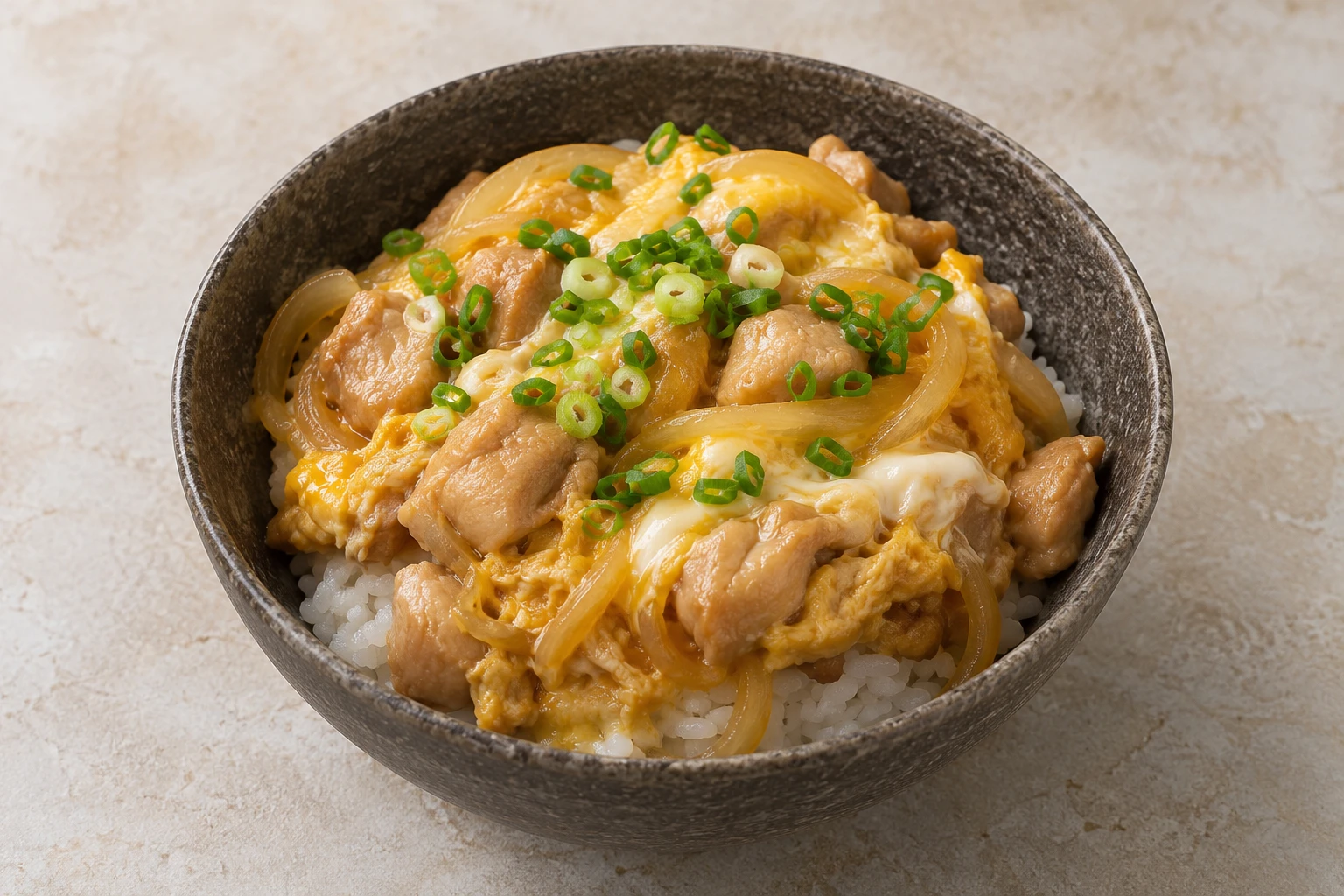
"Parent and child" chicken and egg rice bowl (Oyakodon)
Nutrition / servings
783kcal
47gProtein
97gCarbs
22gFat
Ingredients
- For the topping
- 1.1 lb (500 g) chicken thigh fillet
- 1 pcs onion
- 1.27 US cup (300 ml) dashi stock
- 4 tbsp soy sauce
- 3 tbsp mirin
- 1 tbsp sugar
- 6 pcs egg
- 2 pcs spring onion
- For the rice
- 14.11 oz (400 g) sushi rice
- 2.03 US cup (480 ml) water
Description
Preparation: For any eggs, egg yolks or egg whites used raw or not fully cooked in this version, use commercially available pasteurised products. This also applies to any newly added eggs. If these products are unavailable, fully cook the egg component; both the white and yolk must set. For young children, pregnant people, older adults and people with weakened immune systems, choose the fully cooked version.
1. Rinse the rice three times, soak for 30 minutes, then bring to the boil covered with the water, simmer on low for 12 minutes and rest for 10 minutes.
2. Cut the chicken thighs into bite-sized pieces and the onion into thin wedges.
3. In a smallish frying pan, bring the dashi to the boil with the soy sauce, mirin and sugar, add the onion and chicken and simmer for 6-7 minutes until the chicken is cooked.
4. Beat the eggs only lightly (leave streaks of white) and pour them into the pan in two stages: cook the first half for 1 minute, then pour over the second, cover and take off the heat after 30 seconds.
5. The egg should be just set, with the top still creamy.
6. Spoon the hot rice into deep bowls, slide the chicken and egg topping over it with the broth, sprinkle with spring onion and serve at once.
Tip: The name – "parent and child" – refers to the chicken and the egg. In Japan it's made one portion at a time in a small pan with a vertical handle (oyako-nabe); if you do the same, it looks even better.
Add it to your calendar and plan your weekly meals with it!
Your plan stays in this browser for up to 24 hours. Register or sign in to review and save it to your calendar, keep your recipes and use your shopping list later.